Meals in Ancient Rome
We were lucky to have lived, worked, and extensively traveled to different parts of the world. Naturally, we jumped at the opportunity to discover the local cuisine and culinary traditions. If I could travel back in time, I guess the first thing I would do is sample the meals in Ancient Rome.
This post contains affiliate links. It helps keep our site running at no additional cost to you. Read more about it on our disclosure page here.
Table of Contents
Meals in Ancient Rome

Since settling in Italy, we crisscrossed the country with our baby daughter in tow. As we follow in the footsteps of the Romans (and Phoenicians, Etruscans, Greeks, Spaniards, Arabs, and so on), the diversity of the country’s fantastic food amazes us. Also, the cadence of the meals and when and how much they eat differ from region to region.
It shouldn’t be surprising; the Italian Peninsula has been a melting pot of cultures since ancient times.
Every time I sit down to eat, I wonder about the origin of the dish in front of me. Is it something the Romans used to eat? Or has its roots in the Middle Ages or Renaissance period? Perhaps it is a more recent North African, East European, or Middle Eastern influence. My only certainty is that pineapple was never added to the pizza—it is against the law, as it should be in any civilized society! 🙂
So, what were the typical meals in Ancient Rome?
Breakfast
The first meal of the day, called ientaculum, was consumed at the break of dawn. Remember, in the times before electricity, the day started as soon as the sun rose, and it mostly ended at sunset. Bumbling in the dark wasn’t fun, and most people couldn’t afford vast quantities of lamp oil.
Romans weren’t big fans of breakfast. It was a light meal, consumed on the run, usually standing rather than sitting or lying down. Breakfast wasn’t a family affair but a “darling, I have to run” thing. It reminds me of my corporate executive days.
Ientaculum consisted of bread dipped in wine, maybe with a side of olive oil, garlic, a fruit, or an egg. Also, the leftovers from last night’s dinner might have been served.
Lunch
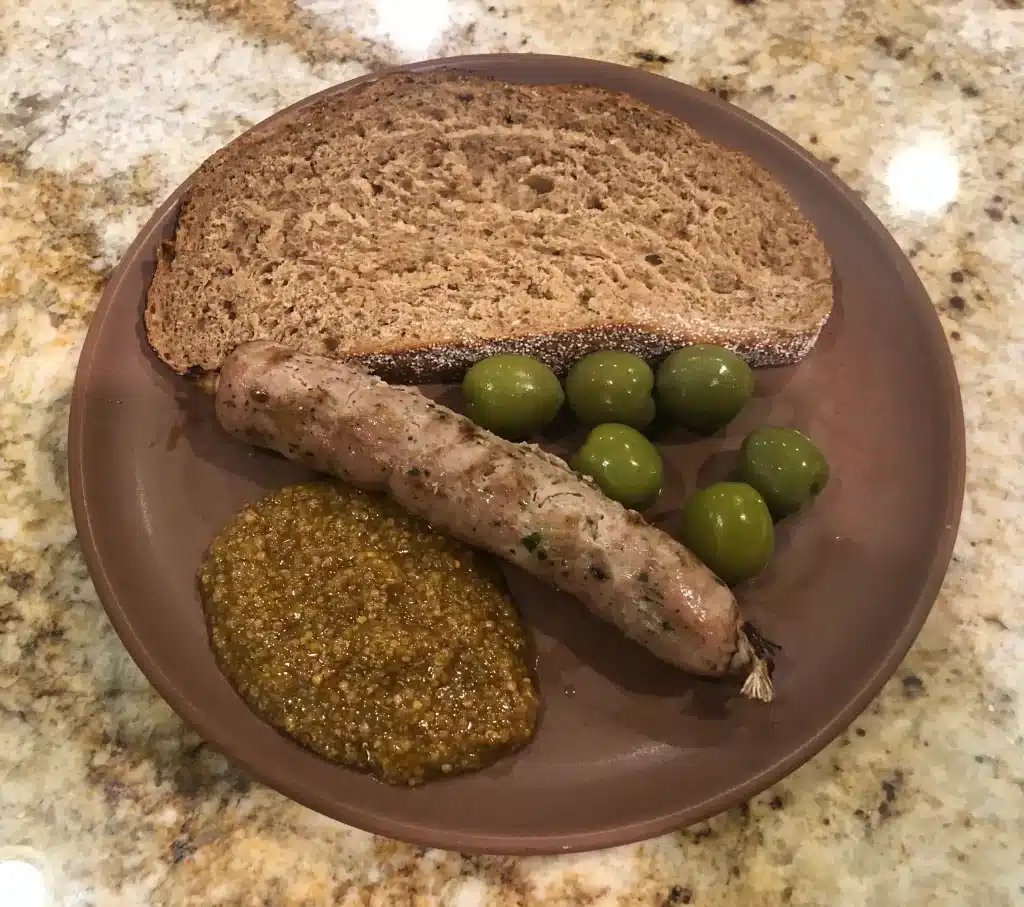
The midday meal, called prandium in later Roman times, differed based on one’s social class.
For the wealthy, it was a kind of brunch, a prelude to the main event in the daily life of those who could afford it: dinner.
Cold cuts, eggs, vegetables, cheese, and bread, all of it seasoned with salt, olive oil, and watered wine—except the wine, it was more like what we eat at breakfast in modern times.
For common folk, it was their main meal—one can’t do heavy physical work on an empty stomach. However, food was expensive, so they had to limit themselves to one dish, usually sausage or fish, vegetables, and bread, washed down with watered wine.
Supper or Tea Time
The vesperna was a light meal consumed late afternoon or at sundown. For ordinary people, it was the last meal of the day. It consisted of one low-protein, meatless dish, typically a porridge made of emmer, fat, water, and salt.
The millionaires gradually skipped the vesperna in favor of cena, the infamous Roman feasts.
Dinner
To this day, Italians enjoy a heavy four-course dinner, consumed late in the evening (starting at ~20:30). When possible, they share it with extended family members and friends, eating, drinking, and talking until midnight. Wealthy Romans did the same.
Cena was a feast that started at sundown and could go on late into the night (or even early morning). It was expensive, and only a few could afford it; cena wasn’t for the plebs, so to speak.
Consider it the modern-day equivalent of inviting your friends and family to an expensive restaurant every evening. Unless you can spend $50.000 a month on dinners, you probably wouldn’t have belonged to the Romans who could enjoy cena.
Feasting alone wasn’t fun, so Romans regularly invited their friends. Usually, they took turns organizing it; one evening was up to the Julii, the other evening to their friends, the Marcii.
For some individuals, joining different dinners was a way of life. For instance, a fashionable philosopher could secure dinner invitations from wealthy hosts and eat for free regularly despite not being rich.
At these dinners, the guests ate reclining on couches while the children sat on stools.
The cena included entertainment, such as singers or dancers. Yet, not every dinner was a sex party, as some might imagine. On the contrary, orgies were less common than you might think.
The Dinner Courses
Typically, the dinner had four courses.
The gustatio consisted of appetizers, usually eggs and salad. The eggs were prepared in different ways, most often cooked or poached.
The main course, called primae mensae, varied depending on the person’s wealth. The really affluent split the main course into three parts, basically having three different dishes as the main course. The meat was expensive, so it was consumed in moderation. Even those who could afford it were careful not to eat too much meat; flaunting wealth was considered inappropriate. Yet, then as now, wealth wasn’t the exclusive domain of those with taste and refinement.
Next came the dessert, the secundae mensae. Unlike today, it wasn’t necessarily sweet; Romans didn’t have refined sugar or high-quality butter. Usual desserts consisted of fruits and honey, but also seafood, olives, and chickpeas.
The last course, or the comissatio, wasn’t really food but a final round of drinks.
Why did Romans mix water with wine?

If you wonder why Romans consumed watered wine with every meal, remember that water wasn’t chlorinated, so it was full of bacteria. Drinking it neat could lead to diarrhea, severe indigestion, and even death. The alcohol in the wine acted as a disinfectant.
It’s too bad that few of our political leaders read history; they might have learned a thing or two about life before modern health practices.
All this talk about food made me hungry, so I am off. Bon appetite!


